What is Mass Spectrometry
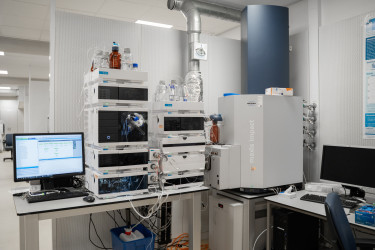
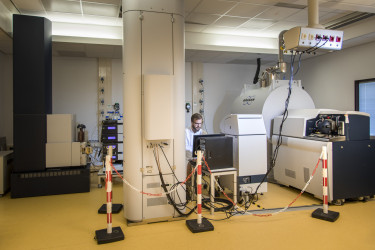
Imagine a machine that identifies molecules based on their unique mass-to-charge ratios. Similar to having a narcotic dog that doesn’t just detect the presence, but exactly tells you what kind of drug and how much is in the suitcase.
Scientists would say: Mass Spectrometry (MS) is a highly sensitive analytical technique used to identify, quantify, and characterize molecules based on their mass-to-charge ratio (m/z). It plays a critical role in drug discovery, proteomics, food safety, and clinical diagnostics.
How does it work
Mass spectrometry works in the basis in three main steps
- Ionization – The sample (e.g. blood, serum, urine, spine fluid etc.) enters the MS machine is converted into charged particles (ions).
- Separation – These ions are separated based on their weight/mass-to-charge ratio.
- Detection – The separated ions are detected, and a mass spectrum is generated showing their relative abundance (providing us an exact chemical profile).
- X-axis: Mass-to-charge ratio (m/z)
- Y-axis: Relative abundance (how much of each ion is detected
Each peak corresponds to an ion. The height reflects the quantity, and the location reflects the m/z.
A typical mass spectrum looks like this:
What can you do with this?
Mass spectrometry allows you to:
- Identifying unknown compounds
- Quantifying known substances
- Determining molecular structure
- Proteomics (studying proteins)
- Drug development and metabolomics
- Environmental testing and forensics